Shipping Estimate
USA
- USA
- CAN
- USA
- CAN
Ships within 48 hours · Estimated delivery Jul 10 - Jul 15
 Promo Codes Available:
For Your Every Summer RSVP, with Code: SUMMER15
Description
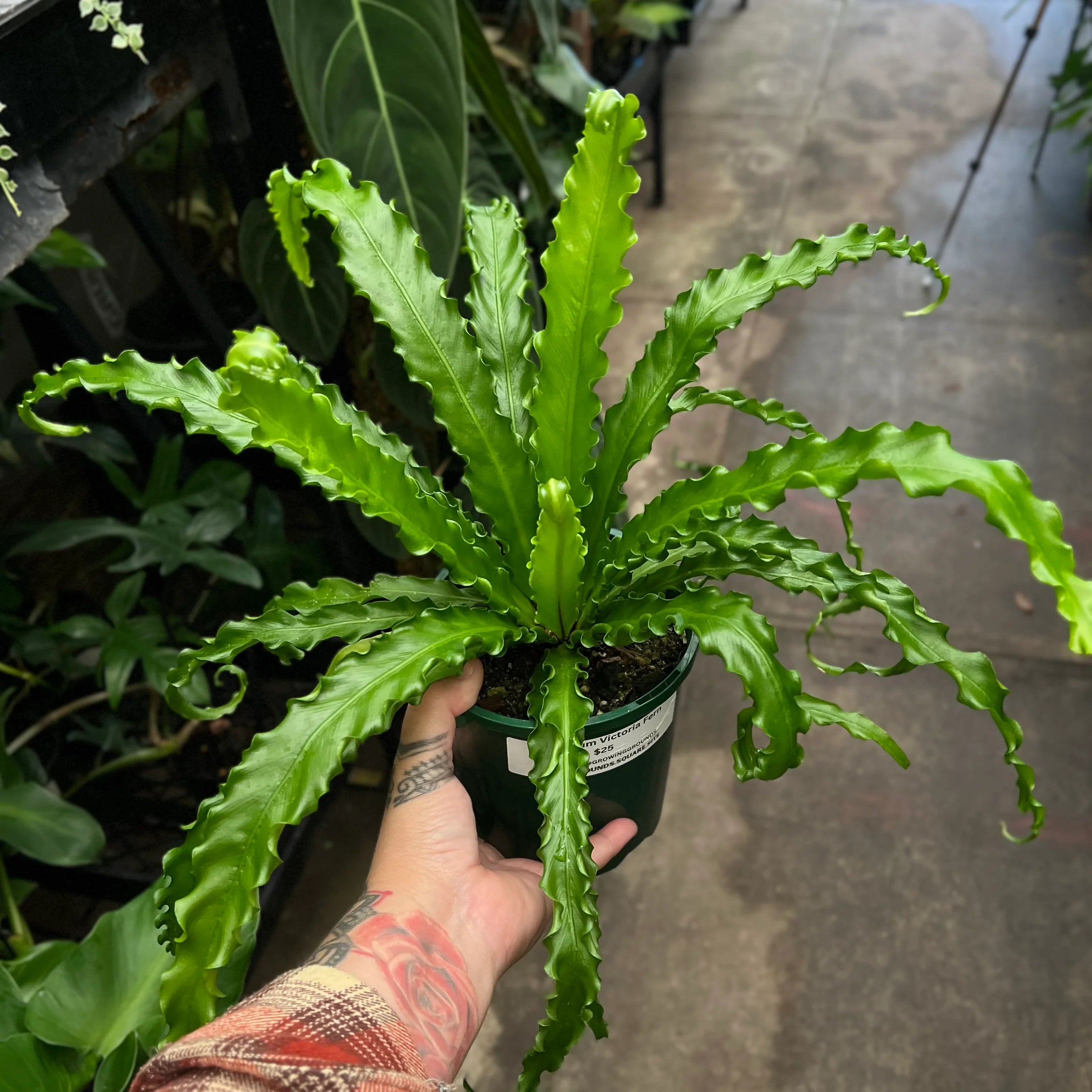
bird's nest fern osaka Asplenium Victoria | Japanese Bird's Nest FernSculptural Waves from Japan Asplenium 'Victoria' is a study in natural sculpture. Those intensely wavy, rippled fronds create a visual rhythm that draws the eye in, each leaf undulating and folding upon itself in ways that seem almost deliberate. As the plant matures, this characteristic waviness only intensifies, transforming an already striking fern into something truly architectural. This cultivar of the Japanese Bird's Nest Fern (Asplenium
Sculptural Waves from Japan
Asplenium 'Victoria' is a study in natural sculpture. Those intensely wavy, rippled fronds create a visual rhythm that draws the eye in, each leaf undulating and folding upon itself in ways that seem almost deliberate. As the plant matures, this characteristic waviness only intensifies, transforming an already striking fern into something truly architectural.
This cultivar of the Japanese Bird's Nest Fern (Asplenium Antiquum) hails from the temperate and subtropical forests of East Asia, where the species grows on cliffs, tree trunks, and rocky outcrops near waterfalls in Japan, Korea, Taiwan, and southeastern China. Unlike its tropical cousin Asplenium Nidus, this species has evolved to handle cooler conditions, making it notably hardier and more forgiving as a houseplant.
The 'Victoria' cultivar is celebrated for taking the naturally wavy margins of Asplenium Antiquum to an extreme. Where the standard species has gentle undulations, 'Victoria' produces fronds that are scrunched, rippled, and gloriously textured. Each new frond unfurls from the fuzzy brown central crown looking like a tightly rolled scroll, gradually opening to reveal that characteristic sculptural form.
Light Requirements
Asplenium 'Victoria' thrives in bright indirect to medium light, and can tolerate brighter conditions than many ferns. An east or north-facing window provides ideal lighting, offering gentle brightness without the harsh intensity of direct afternoon sun. The species can also adapt to lower light situations, though growth will be slower and the fronds may lose some of their characteristic waviness.
Interestingly, brighter light tends to encourage more pronounced wave formation in the fronds. If your plant seems to be producing flatter leaves than you'd like, try moving it to a slightly brighter position. Just avoid placing it in harsh direct sunlight, which can scorch the delicate fronds and cause yellowing.
Watering
Keep the soil consistently moist but never waterlogged. Water thoroughly when the top 2-3 centimetres of soil begin to feel dry, allowing excess water to drain away completely. Like all bird's nest ferns, Asplenium 'Victoria' is sensitive to sitting in wet soil, which can quickly lead to root rot.
The golden rule with bird's nest ferns: never water directly into the central crown. That fuzzy brown nest where new fronds emerge can trap moisture and rot if water pools there. Instead, direct water to the soil around the base of the plant, allowing it to soak down to the roots. Bottom watering by placing the pot in a dish of water for 15-20 minutes is another excellent approach.
Use room temperature water, and if your tap water is particularly hard or heavily chlorinated, consider using filtered, distilled, or rainwater to avoid mineral buildup on those beautiful fronds.
Humidity and Temperature
While Asplenium 'Victoria' appreciates humidity between 50 and 70 percent, it's notably more tolerant of average household conditions than many tropical ferns. This adaptability is one of the reasons it makes such an excellent houseplant. That said, it will look its absolute best with some added humidity, whether from a pebble tray, humidifier, or placement in a naturally humid room like a bathroom or kitchen.
One of this cultivar's greatest strengths is its cold tolerance. Where Asplenium Nidus demands consistently warm temperatures, A. Antiquum 'Victoria' can handle cooler conditions and brief temperature dips that would stress its tropical relatives. Keep temperatures between 15 and 27 degrees Celsius for best results, though it can tolerate brief periods somewhat cooler. Just protect from frost and keep away from cold draughts.
Soil and Potting
Use a rich, well-draining, slightly acidic potting mix that retains moisture without becoming soggy. A quality indoor potting mix amended with perlite and orchid bark provides excellent drainage while maintaining the organic richness this fern appreciates. The mix should be loose and airy, mimicking the organic debris this epiphytic fern would naturally root into on tree trunks and rocks.
Repot every two to three years or when the plant becomes rootbound. Spring is the ideal time to repot. Choose a pot only slightly larger than the current one, as bird's nest ferns prefer to be somewhat snug in their containers. Ensure good drainage holes to prevent water from pooling.
Feeding
Feed monthly during the growing season (spring through summer) with Growth Technology Foliage Focus diluted to half strength (1.5ml per litre). Apply fertiliser directly to the soil, taking care to avoid the fronds and central crown. Over-fertilising can cause weak or deformed fronds and brown tips, so less is more with these ferns.
If you notice the characteristic waviness of the fronds diminishing, reduce fertilising frequency. Too much fertiliser can actually cause the fronds to lose their distinctive rippled texture.
Grooming and Care
Asplenium 'Victoria' requires minimal maintenance. Remove any damaged, yellowing, or browning outer fronds at the base using clean, sharp scissors or pruning shears. This keeps the plant looking tidy and directs energy to healthy new growth.
Those glossy fronds can accumulate dust over time. Gently wipe leaves with a damp cloth to keep them looking their best and ensure optimal light absorption. Support each frond from underneath while cleaning to avoid damage. Take particular care with young, unfurling fronds, which are extremely fragile and can be permanently damaged if touched.
Avoid using leaf shine products, as the fronds are sensitive to chemicals and the natural gloss is beautiful enough without enhancement.
Perfect For
- Pet-friendly households (non-toxic to cats and dogs)
- Cooler rooms where tropical ferns struggle
- Bathrooms and kitchens with natural light
- Adding sculptural interest to plant collections
- Fern enthusiasts and collectors
- Those wanting an air-purifying houseplant
- Creating Japanese or Asian-inspired displays
- Beginners looking for a forgiving fern
Frequently Asked Questions
How is this different from a regular Bird's Nest Fern?
Asplenium Antiquum 'Victoria' differs from the common Bird's Nest Fern (Asplenium nidus) in several ways. The fronds are more uniform in width, the waviness is far more pronounced and sculptural, and the plant is generally hardier and more cold-tolerant. 'Victoria' specifically is selected for its intensely rippled fronds that become more dramatic as the plant matures.
Why are my new fronds less wavy than the older ones?
New fronds may be less wavy if the plant is in lower light conditions or receiving too much fertiliser. Try moving your plant to a brighter spot (still avoiding direct sun) and reducing fertiliser application. The waviness should return in subsequent fronds.
The tips of my fronds are turning brown. What's wrong?
Brown tips typically indicate low humidity, underwatering, or exposure to cold draughts. Increase humidity around the plant, ensure consistent soil moisture, and keep away from air conditioning or heating vents. You can trim brown tips with clean scissors for a tidier appearance.
Can I grow this outdoors in Australia?
In frost-free areas with mild temperatures, Asplenium Antiquum can be grown outdoors in a shaded, protected position. It's actually hardier than A. nidus and can tolerate cooler conditions. Grow it in the fork of a tree, on rocks, or in shaded garden beds with rich, organic soil.
What are the brown lines on the back of the fronds?
These are sori, clusters of spore-producing structures arranged in a distinctive herringbone pattern. They're completely normal and indicate a healthy, mature fern. Don't mistake them for pests or try to remove them.
Please Keep in Mind
Asplenium 'Victoria' is a rewarding fern that combines striking sculptural form with easier care than many tropical relatives. The dramatic waviness of the fronds intensifies as the plant matures, making established specimens particularly impressive. Avoid watering into the central crown, provide consistent moisture and humidity, and your fern will reward you with years of beautiful growth. This plant is non-toxic to pets and humans, making it safe for family homes with curious cats, dogs, and children.
If you are from a quarantine restricted state and would like to purchase this plant, we recommend using Paradise Distributors concierge service. Make sure to contact them prior to purchasing: [email protected]
Shipping Notes
- Free Standard Shipping on $100+ Orders to the USA.
- Except Preorder products are shipped in 48 hours.
- Delivery to the USA:
- Standard Shipping : 3-10 business days
- If time is of the essence, please consider selecting expedited delivery for faster service.
Exchange/Return Notes
- We offer a 30-day return/exchange service after receiving.
- Final sale items are not eligible for returns or exchanges.
- To process your return/exchange, please contact us at [email protected]
- Please click here for more details>>> Return & Exchange Policy